Why Cold Minnesota Winters Kill Car Batteries Faster And How to Prevent It?
At ADL Auto Repair and Driveshafts in Centerville, Minnesota, we help local drivers prepare their vehicles for harsh winter conditions. From complete charging system checks to specialized driveline care, keeping your battery healthy ensures your vehicle stays reliable all season long.
Why Cold Minnesota Winters Kill Car Batteries Faster
A car battery produces electricity through an internal chemical reaction between lead plates and sulfuric acid solution. When winter temperatures drop, two main physical phenomena occur simultaneously:
1. Slower Chemical Reactions and Reduced Amp Capacity
Frigid temperatures slow chemical kinetics down significantly. At 32°F (0°C), a standard car battery loses roughly 20% to 35% of its available starting power. Once temperatures drop to 0°F (-18°C) or lower, a battery retains only about 50% of its normal cranking capacity.
2. Thicker Motor Oil Demands Double the Power
At the exact moment your battery loses half its output, your engine requires significantly more energy to turn over. Cold weather causes motor oil to thicken and increase in viscosity. Pushing thick oil through the engine block forces the starter motor to draw up to twice as much amperage from an already weakened battery.
3. Severe Parasitic Drain from Winter Accessories
Defrosters, cabin heaters, heated seats, steering wheel warmers, and windshield wipers heavily tax your electrical system. If you primarily make short trips around town, your alternator may not have enough running time to fully recharge the battery between starts.
5 Proactive Steps to Prevent Winter Battery Failure
You do not have to wait for a freezing morning breakdown to address your battery’s health. Follow these expert steps to protect your vehicle throughout Minnesota winters:
- Get a Cold Cranking Amps (CCA) Test: Have your battery load-tested in late autumn. CCA measures how many amperes a battery can deliver at 0°F for 30 seconds while maintaining usable voltage. Weak batteries should be replaced before the first hard freeze.
- Clean Terminal Corrosion: White or bluish powder build-up around battery posts creates electrical resistance, blocking current flow. Clean terminals with a wire brush and baking soda solution, then coat them with dielectric grease.
- Limit Short Trips and High Accessory Loads: Driving for at least 20 to 30 continuous minutes allows your alternator to restore the energy used during engine startup. Turn off seat heaters and cabin defrosters before turning off the engine.
- Park in an Enclosed Garage or Use a Battery Blanket: Shielding your vehicle from extreme wind chill helps preserve battery core temperatures. If you park outside, consider using an electric battery warmer or trickle charger.
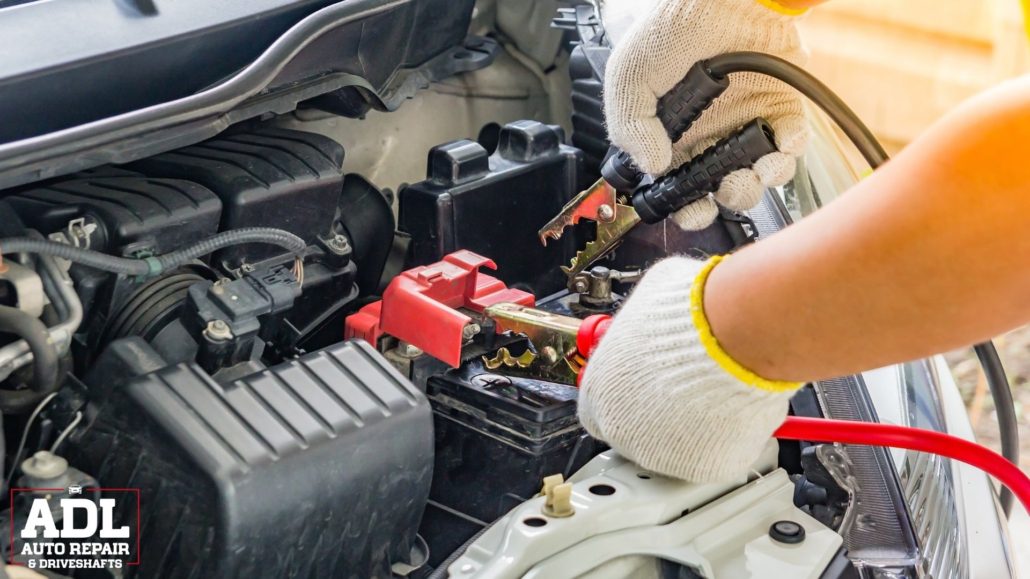
- Keep Your Battery Fully Charged: A fully charged car battery will not freeze until temperatures drop well below -70°F. However, a discharged or weak battery can freeze near 32°F, cracking its internal plates and casing permanently.
Comprehensive Electrical and Vehicle Service in Centerville, MN
If your vehicle turns over slowly on cold mornings or your headlights flicker when idling, your battery or alternator may be failing. Addressing electrical warning signs early prevents unexpected roadside breakdowns during severe weather.
The team at ADL Auto Repair and Driveshafts offers complete battery testing, alternator replacements, starter repairs, and full mechanical care for drivers in Centerville, Lino Lakes, Blaine, and across the Twin Cities metro region.
Frequently Asked Questions About Winter Car Batteries
Why do car batteries die more often in winter than summer?
While summer heat accelerates internal battery degradation, winter cold thickens motor oil and slows chemical reactions. The combination of increased engine resistance and reduced battery capacity causes weak batteries to fail completely during cold weather.
At what temperature will a car battery freeze?
A fully charged lead-acid battery will not freeze until roughly -77°F (-60°C). However, a discharged battery with low specific gravity can freeze at 32°F (0°C), causing internal ice expansion that damages internal lead plates.
How many years does a car battery typically last in Minnesota?
In Minnesota’s extreme climate, average car batteries last between 3 and 5 years. Routine annual testing after year three helps catch failing cells before severe cold weather causes a sudden lockout.