Fall Brake Check Before Winter: How Ice and Salt Impact Stopping Power
Quick Summary: Minnesota winters present severe driving hazards. Freezing ice dramatically reduces tire friction, while aggressive road salt causes caliper corrosion, pad rust-jacking, and brake line degradation. A comprehensive fall brake inspection at ADL Auto Repair and Driveshafts ensures your braking system maintains full stopping power before sub-zero temperatures arrive.
As fall leaves turn in Minnesota, drivers know that ice, sleet, and snow are just around the corner. While most motorists remember to check their anti-freeze or swap out their tires, one critical system is often overlooked: the braking system. Scheduling a fall brake check before winter is essential to ensure your vehicle can stop safely on slick roads.
Sub-zero temperature drops and chemical road treatments put extreme stress on your car’s hydraulic and mechanical components. Below, we break down how ice and road salt impact your vehicle’s stopping power and why preventive brake maintenance in the autumn can save you from dangerous winter road incidents.
1. The Science of Stopping: How Ice Destroys Tire Traction
When you press your brake pedal, your brake pads clamp onto the rotors, generating friction to slow down the wheels. However, stopping power is ultimately constrained by the friction between your tires and the road surface. On dry pavement, your tires have maximum grip. On icy or slushy Minnesota roads, that friction drops precipitously.
When ice reduces traction, your vehicle requires significantly more distance to bring its momentum to a complete halt. If your brake pads are worn unevenly, or if your calipers are sticking, stopping smoothly on ice becomes nearly impossible. An uncalibrated or worn brake system can trigger prematurely into ABS (Anti-lock Braking System) lockup or cause your vehicle to fish-tail on slippery highway patches.
2. How Road Salt Accelerates Brake Component Corrosion
Road salt (sodium chloride) and liquid magnesium chloride are vital for melting highway ice, but they are exceptionally corrosive to automotive metals. Throughout winter, salty slush sprays into your wheel wells and coats your braking components.
Salt damages your stopping power in three major ways:
- Caliper Slide Pin Corrosion: Salt and moisture destroy the protective boots around caliper slide pins, causing them to seize. A seized caliper prevents brake pads from fully retracting or pressing evenly, leading to rapid, uneven pad wear and sluggish braking response.
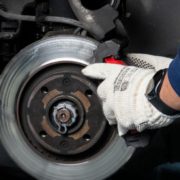
- Rotor Corrosion and “Rust-Jacking”: Severe rust builds up on the edges and cooling vanes of brake rotors. In severe cases, rust accumulates under the brake pad lining material (known as rust-jacking), causing the friction material to separate completely from the steel backing plate.
- Brake Line Degradation: Moisture and salt pool around exposed steel brake lines. Over time, rust pinholes develop, causing fluid leaks, pressure loss, and soft or spongy brake pedal feel.
3. What is Included in a Professional Fall Brake Inspection?
A simple visual check through your wheel spokes is not enough to guarantee winter safety. At ADL Auto Repair and Driveshafts, our certified technicians perform a thorough multi-point brake evaluation designed to catch winter vulnerabilities before they turn into costly repairs or accidents.
During a autumn brake inspection, we evaluate:
- Brake Pad Thickness & Friction Wear: Ensuring adequate pad depth remains to handle winter emergency stops.
- Rotor Condition & Thickness: Checking for rust pitting, scoring, or thermal warping.
- Caliper Lubrication & Seal Integrity: Servicing slide pins and hardware to prevent salt-induced sticking.
- Brake Fluid Moisture Testing: Testing for water absorption in brake fluid. Moisture in brake fluid can freeze into ice crystals in cold weather or lower the boiling point, causing complete pedal loss.
- Lines, Hoses & ABS Sensors: Inspecting underlying hydraulic lines for corrosion or leaks, and cleaning wheel speed sensors.
Schedule Your Fall Brake Check in Centerville, MN
Don’t wait for the first winter snowstorm to discover your brakes are sticking or failing. Ensure complete peace of mind on treacherous winter roads with a full safety evaluation from the local experts at ADL Auto Repair and Driveshafts.
Call us today at (651) 426-8700 or visit our shop at 7095 21st Avenue North, Centerville, MN 55038 to schedule your fall brake service.
Frequently Asked Questions
Why should I get a brake inspection in the fall?
A fall brake check identifies worn pads, corroded rotors, and fluid moisture before freezing temperatures and road salt compound these issues. Catching minor wear early ensures maximum stopping distance on icy roads.
How does road salt damage car brakes?
Road salt accelerates rust on metal brake components. It seizes caliper slide pins, pitted brake rotors, and rusts steel hydraulic brake lines, leading to uneven pad wear, sticking brakes, and potential brake fluid leaks.
How often should I change brake fluid in Minnesota?
Brake fluid should generally be tested and flushed every 2 to 3 years. Because brake fluid is hygroscopic (absorbs moisture), water build-up in freezing winter conditions can freeze in brake lines or corrode master cylinder internal seals.
What are the signs that my brakes need winter service?
Common warning signs include squealing or grinding noises when pressing the pedal, a soft or spongy brake pedal, vehicle pulling to one side when stopping, or a grinding sensation caused by rusted rotors.