4 Signs You’ve Damaged Your Suspension or Alignment
Potholes, curbs, rough roads, and winter driving conditions in Minnesota can be hard on your vehicle. Many drivers don’t realize that even one hard impact can knock a vehicle out of alignment or damage suspension components.
At ADL Auto Repair & Driveshafts, we frequently inspect vehicles after drivers notice something “feels off” while driving. The problem is that suspension and alignment issues often start small — but if ignored, they can quickly lead to unsafe handling and expensive tire wear.
A vehicle may have suspension or alignment damage if it pulls to one side, the steering wheel is crooked, tires wear unevenly, or you feel vibration and bouncing while driving. These issues often follow pothole impacts and should be inspected promptly for safety and tire protection.
In this guide, we’ll explain the four most common signs you’ve damaged your suspension or alignment, what they mean, and when to schedule an inspection.
What’s the Difference Between Suspension and Alignment?
Many drivers think they are the same thing, but they are closely related and work together.
Suspension system:
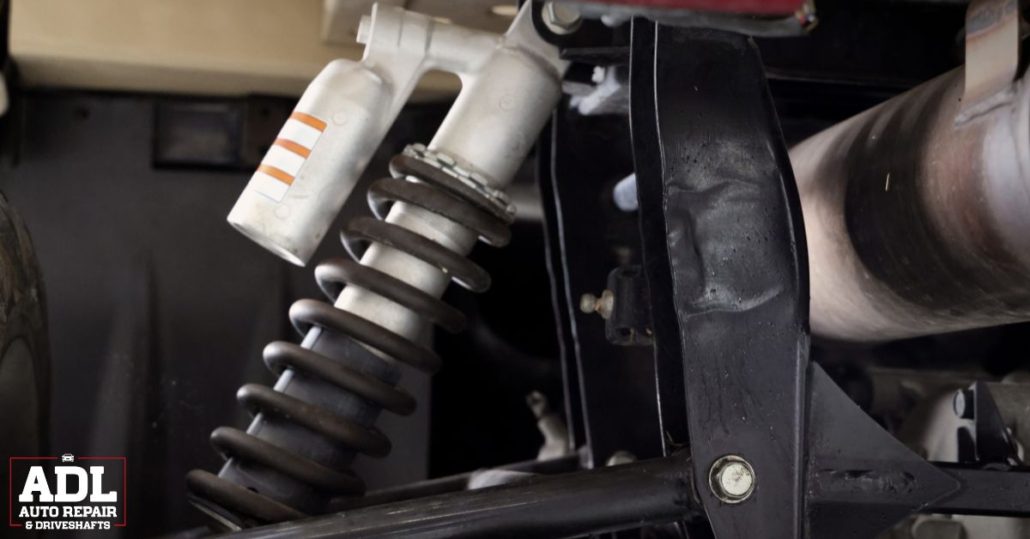
Includes shocks, struts, springs, control arms, ball joints, and bushings. It supports vehicle weight and absorbs road impact.
Wheel alignment:
Refers to the angles of the wheels — camber, caster, and toe — which determine how tires contact the road.
Here’s the key point:
Alignment problems are often caused by worn or damaged suspension parts.
If the underlying suspension issue isn’t repaired, the alignment will not stay correct.
Sign #1 – Your Car Pulls Left or Right
One of the earliest signs of alignment trouble is the vehicle drifting while driving on a straight road.
You may notice:
- You constantly correct the steering wheel
- The vehicle moves toward the shoulder
- Highway driving feels tiring
Why it happens
A pothole or curb impact can shift wheel angles. When tires no longer point in the same direction, the car pulls toward the wheel with the most resistance.
Why it matters
This reduces control, especially on wet or icy Minnesota roads, and accelerates tire wear.
 Sign #2 – Uneven or Rapid Tire Wear
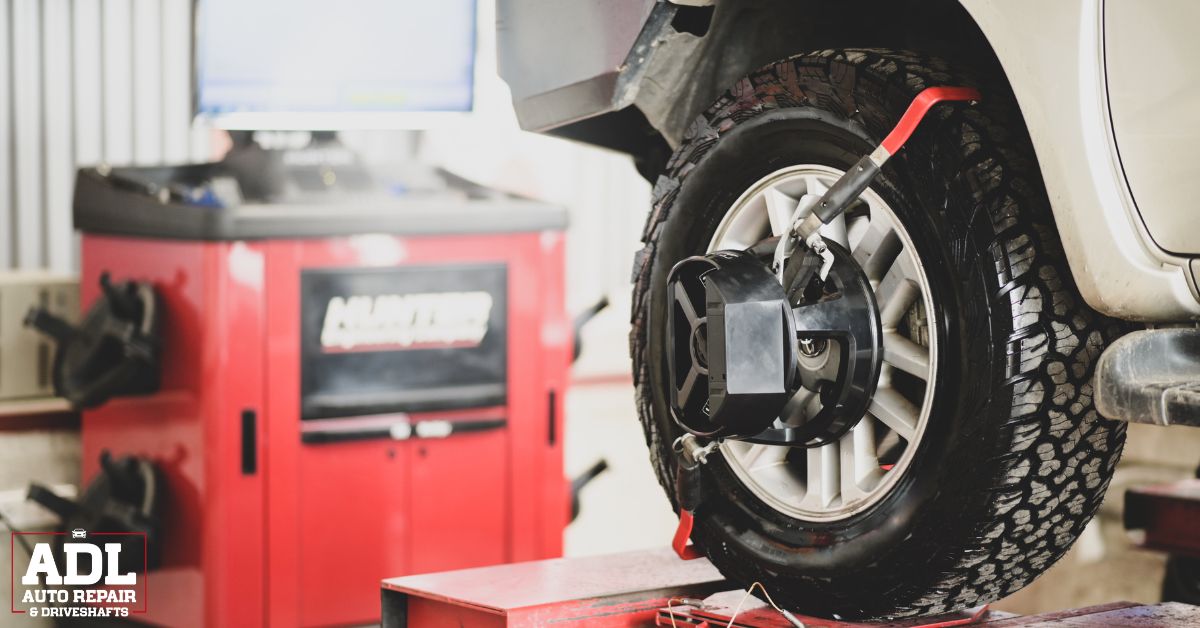 Sign #2 – Uneven or Rapid Tire Wear
Your tires often tell the story before you feel a major problem.
Look for:
- Inside or outside edge wear
- Feathering (tread feels sharp one direction)
- One tire wearing faster than the others
What it means
Misalignment forces the tire to scrub sideways across the road instead of rolling straight. Even a small angle issue can destroy a tire thousands of miles early.
This is one of the most expensive consequences of ignoring alignment problems.
Sign #3 – Steering Wheel Is Crooked
If your steering wheel is not centered while driving straight, your alignment is off.
Common causes include:
- Shifted tie rods
- Bent suspension components
- Impact damage from a pothole
Drivers often ignore this because the car still drives. However, this symptom almost always indicates incorrect wheel angles and should be checked soon.
Sign #4 – Vibrations, Clunking, or Excessive Bouncing
This sign typically indicates suspension damage rather than just alignment.
You may feel:
- Steering wheel vibration
- Clunking over bumps
- Vehicle bouncing after hitting a dip
- Reduced stability on the highway
Likely causes
- Worn shocks or struts
- Loose ball joints
- Damaged control arms
- Worn bushings
This condition affects braking distance and vehicle control, making it a safety concern.
What Causes Suspension and Alignment Damage?
In Minnesota, the most common causes are environmental and road related:
- Potholes (especially late winter/early spring)
- Hitting curbs or parking blocks
- Road salt corrosion
- Rough gravel roads
- Minor collisions
Even a single hard impact can bend components slightly — enough to affect handling and tire wear.
Why You Shouldn’t Wait
Ignoring these symptoms can lead to:
- Premature tire replacement
- Reduced fuel efficiency
- Poor steering control
- Increased braking distance
- Damage to steering and suspension components
In many cases, a simple alignment early can prevent a much larger repair later.
What Happens During a Professional Inspection?
At ADL Auto Repair & Driveshafts, a suspension and alignment inspection typically includes:
- Checking steering and suspension components
- Inspecting ball joints and tie rods
- Measuring ride height
- Evaluating tire wear patterns
- Performing computerized wheel alignment measurements
If parts are worn or loose, we address the cause first — then perform the alignment so it stays correct.
How to Prevent Future Problems
You can reduce the risk of suspension and alignment damage by:
- Slowing down for potholes
- Avoiding curbs when parking
- Checking tire pressure monthly
- Rotating tires regularly
- Scheduling an annual suspension inspection
A yearly inspection is especially helpful before winter driving season.
Local Driving Tip for Minnesota
After winter, potholes dramatically increase. Early spring is one of the most common times we see alignment damage. If you hit a pothole hard enough to feel it in the steering wheel, it’s worth having your vehicle checked.
FAQ – Suspension & Alignment
Can a pothole really damage my suspension?
Yes. Even moderate impacts can bend components or knock alignment angles out of specification.
Is an alignment the same as balancing tires?
No. Balancing corrects weight distribution in the tire and wheel. Alignment adjusts wheel angles and steering geometry.
How often should alignment be checked?
About once a year or anytime you notice pulling, uneven tire wear, or steering changes.
Will new tires fix a pulling problem?
No. If alignment or suspension is the cause, the new tires will wear out quickly too.
How long does an alignment take?
Most alignments take about 1 hour, though suspension repairs can add time if worn parts are found.
Suspension & Alignment
Handling changes are your vehicle’s early warning system. A pull, vibration, or unusual tire wear usually means something underneath the vehicle has shifted or worn out.
Having a professional inspection helps protect your tires, improve safety, and restore proper steering control. If you suspect suspension or alignment damage in Minnesota, catching it early is the best way to avoid larger repairs and keep your vehicle driving straight and safely.
ADL Auto Repair & Driveshafts is here to help drivers understand what their vehicle is telling them and keep it performing reliably in all seasons.