Brake Line Corrosion: How Road Salt Eats Brake Pipes Under Your Vehicle
Every winter, Minnesota roads turn into a heavy battleground of snow, slush, and ice. While road crews work tirelessly to keep traffic moving by applying thousands of tons of rock salt and liquid deicers, those same melting agents wreak havoc on the underside of your car, truck, or SUV. One of the most critical—and dangerous—components vulnerable to this severe winter conditions environment is your vehicle’s brake system. Understanding how road salt eats brake pipes under your vehicle is essential to keeping your car safe and avoiding sudden brake failure on local roads.
The Hidden Danger: How Road Salt Eats Brake Pipes
Standard rock salt (sodium chloride) and modern liquid deicers (magnesium chloride and calcium chloride) are designed to lower the freezing point of water. However, when these chemical compounds mix with road moisture, they form a highly corrosive brine. This brine splashes directly onto the exposed undercarriage of your vehicle, clinging to metal components like your exhaust, frame, and steel brake lines.
Brake lines—also referred to as brake pipes—are rigid steel tubes that transfer hydraulic fluid from the master cylinder to your wheel brakes. When exposed to road salt, chemical reactions accelerate moisture oxidation on bare or compromised metal, leading directly to rust. Over time, rust eats through the protective coating on steel brake pipes, creating pitted surfaces, structural weakness, and eventually, pinhole leaks.
Warning Signs of Corroded Brake Lines
Because brake lines run beneath the chassis, visual inspection isn’t always easy for the average driver. However, your vehicle will usually display clear warning signs when brake line corrosion threatens your safety:
- Soft or Spongy Brake Pedal: If your brake pedal feels unusually soft, squishy, or sinks all the way to the floorboard when pressed, hydraulic pressure is escaping due to a line leak.
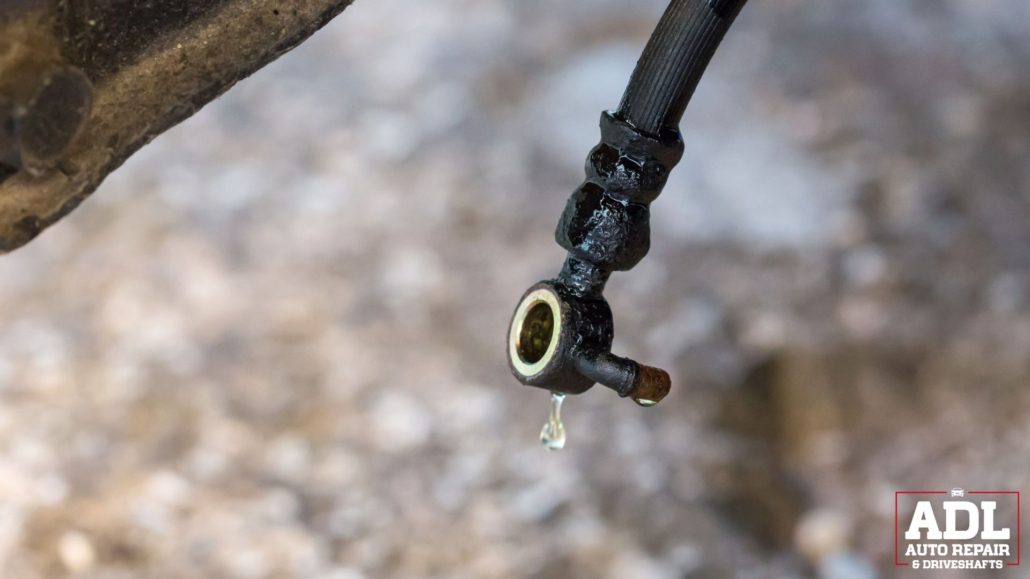
- Brake Fluid Leaks: Look for clear to amber-colored fluid puddling underneath your parked car, particularly near the inner wheels or along the center frame.
- Illuminated Brake Warning Light: A red brake warning light or ABS light on your dashboard often indicates low brake fluid levels caused by line degradation.
- Visible Heavy Rust on the Undercarriage: Flaking, bubbly, or heavily rusted metal along the frame pipes indicates advanced corrosion.
Why Minnesota Drivers Are at Higher Risk
Vehicles driven in Minnesota endure longer exposure to chemical deicers than vehicles in almost any other region. Liquid magnesium chloride clings to metal surfaces far longer than dry rock salt. When packed snow and salt-laden slush get trapped in small crevices beneath your car, corrosion continues to actively decay metal even when temperatures hover near freezing.
 Preventing and Repairing Corrosion at ADL Auto Repair and Driveshafts
 Preventing and Repairing Corrosion at ADL Auto Repair and Driveshafts
Preventative maintenance is the best defense against severe brake pipe degradation. Here is how you can protect your vehicle and what our team does to restore safety:
- Regular Undercarriage Washes: Rinse salt brine off your vehicle’s underside frequently throughout winter and early spring.
- Routine Brake Line Inspections: Have certified mechanics inspect line integrity during seasonal oil changes or tire rotations.
- Professional Replacement with Corrosion-Resistant Lines: If corrosion is detected, replacing damaged steel pipes with rust-proof copper-nickel (NiCopp) lines ensures long-lasting protection against future salt exposure.
At ADL Auto Repair and Driveshafts, our ASE-certified technicians specialize in comprehensive auto repair, driveline services, and brake line replacement for drivers throughout Centerville, Hugo, Lino Lakes, Ham Lake, and the surrounding North Metro area. We carefully inspect your complete hydraulic system to fix rusted lines before they cause hazardous brake failure.
Frequently Asked Questions
How do I know if road salt has damaged my brake lines?
Common signs include a spongy or sinking brake pedal, visible fluid leaks under your car (clear or amber fluid), an illuminated dashboard brake light, or severe visible rust along the steel pipes beneath your vehicle.
Can you drive a car with rusted brake lines?
No. Driving with severely rusted or leaking brake lines is extremely dangerous. Hydraulic pressure can cause a compromised line to burst suddenly, resulting in complete brake loss.
How often should brake lines be inspected in Minnesota?
Due to heavy winter road salt exposure, Minnesota drivers should have their brake lines and undercarriage inspected by a professional mechanic at least once a year or during routine seasonal service.
What is the best way to prevent road salt corrosion on brake pipes?
Regular undercarriage car washes during winter, applying rust-inhibiting coatings, and replacing aging steel lines with corrosion-resistant nickel-copper alloy lines are the most effective preventive measures.