Why Does My Truck Vibrate When Towing a Boat or Camper?
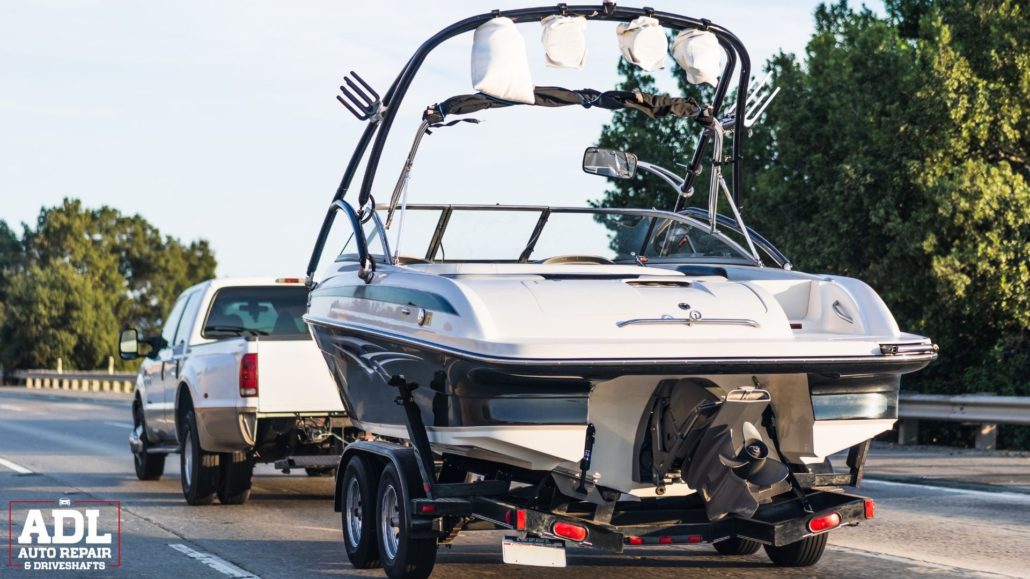
There is nothing quite like hooking up the boat for a weekend on Lake Minnetonka or packing up the camper for a trip up to the North Shore. But if your truck starts vibrating the moment you hit the highway with a heavy load behind you, that peaceful getaway can quickly turn stressful.
A truck that runs perfectly smooth on your daily commute but shakes when towing isn’t something you should ignore. At ADL Auto Repair and Driveshafts here in Minnesota, we specialize in diagnosing these exact driveline headaches.
The primary culprit behind this towing-specific shudder is a shift in your truck’s driveline operating angles and the immense stress placed on your universal joints (U-joints). Let’s break down exactly why this happens and how to fix it.
1. The Physics Behind Driveline Angle Vibrations
When you drop a heavy boat or camper onto your truck’s hitch, the rear suspension naturally compresses. This is known as “squat.” While a little compression is normal, dropping the rear end changes the spatial relationship between your transmission, your driveshaft, and your rear differential.
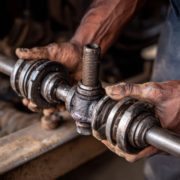
Your driveshaft relies on U-joints to transfer rotational power at an angle. For a vibration-free ride, the operating angle at the front of the driveshaft must closely match the operating angle at the rear.
When your truck squats under a heavy load:
- The matching angles are thrown out of synchronization.
- The U-joints are forced to operate at a much steeper, unequal angle.
- As the driveshaft spins, it speeds up and slows down twice per revolution, creating an angle-related vibration (often felt as a low-speed shudder under acceleration, typically between 0 and 40 mph).
2. Failing U-Joints Under Extreme Torque
If your vibration happens at higher highway speeds (55+ mph) when towing, you are likely feeling a mechanical component failing under pressure. Towing a camper or boat drastically increases the amount of engine torque required to keep your truck moving.
If your U-joints are dry, worn, or have internal needle bearings that are beginning to flatten, they might behave well enough under normal driving conditions. However, once you add hundreds of pounds of tongue weight and force them to transfer massive amounts of towing power, those microscopic flaws translate into noticeable, violent cabin shaking.
3. The “Common Denominator” Check: Is It the Truck or the Trailer?
Before bringing your rig into the shop, perform a quick diagnostic test to isolate the issue:
A Note on Vehicle Safety: A vibrating driveshaft or a failing U-joint isn’t just annoying; it can be dangerous. If a U-joint breaks entirely while you’re traveling at highway speeds with a heavy camper attached, the loose driveshaft can cause catastrophic damage to your transmission, transfer case, or even cause a complete loss of vehicle control.
 Why Does My Truck Vibrate When Towing a Boat or Camper?
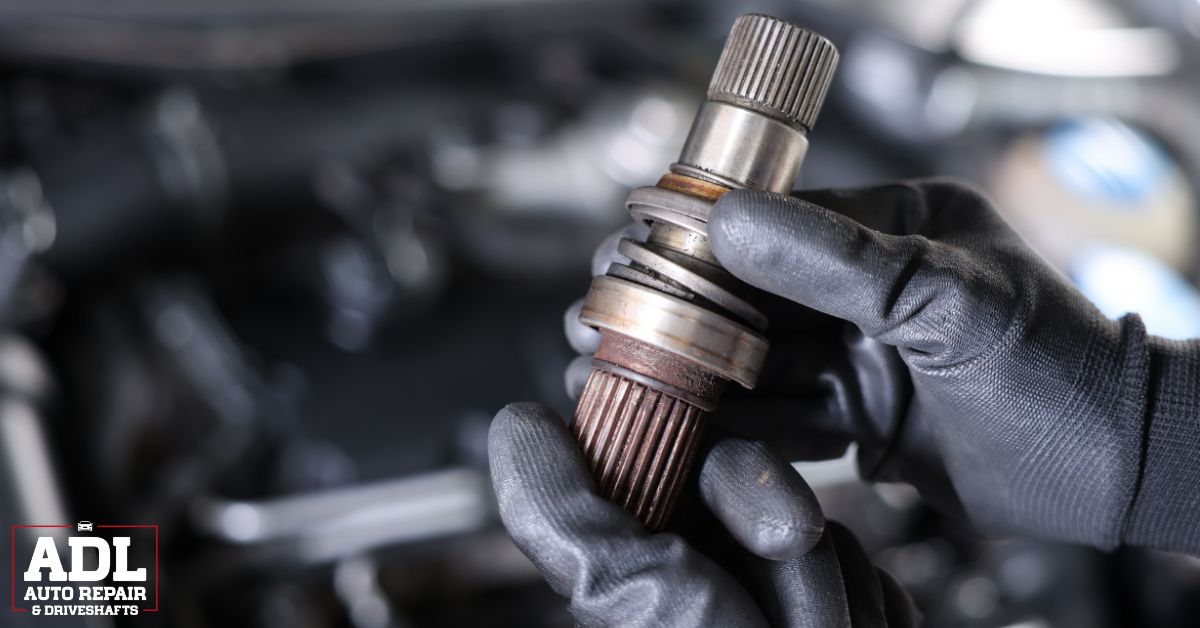 Why Does My Truck Vibrate When Towing a Boat or Camper?
Don’t let a bad shake ruin your weekend plans. Whether your truck needs suspension shims to correct altered driveline angles, a fresh set of heavy-duty U-joints, or a high-speed driveshaft rebalance, the experts at ADL Auto Repair and Driveshafts can pinpoint and fix the issue.
Give us a call or stop by our Minnesota shop before your next major haul to ensure your vehicle is safe, smooth, and ready for the road.
Frequently Asked Questions (FAQ)
Why does my truck shake only when accelerating with a trailer?
This is typically an angle-related driveline vibration. The weight of the trailer causes the rear of your truck to squat, changing the factory-calculated angles of your driveshaft. Under acceleration, the extreme torque combined with these altered angles causes a brief, low-speed shudder.
How do I know if my vibration is coming from the truck or the trailer?
If the vibration stops completely the moment you take your foot off the gas pedal, it is highly likely a truck driveshaft or U-joint issue. If the shaking is continuous and changes strictly with vehicle speed (regardless of whether you are accelerating or coasting), it is more likely an unbalanced wheel or tire issue on either the truck or the trailer itself.
Can a worn U-joint cause vibrations only when towing?
Yes. A U-joint in the early stages of failure may have enough structural integrity to spin smoothly under minimal load. However, when you add the extreme torque requirements and increased drivetrain angles of towing a boat or camper, the internal bearings lock up or experience excessive play, causing a noticeable vibration.