Why Precision Alignment Matters: The Science Behind Even Tire Wear
Most drivers think of tire wear as something that just happens over time. But in reality, how your tires wear tells a detailed story about your vehicle’s alignment and suspension condition. When alignment angles are even slightly off, your tires begin wearing incorrectly almost immediately.
At ADL Auto Repair & Driveshafts in Minnesota, uneven tire wear is one of the most common issues we diagnose. The surprising part is how small the cause can be — sometimes a single pothole impact is enough to change wheel angles and shorten tire life by thousands of miles.
This article explains the science behind wheel alignment, how it affects tire wear, and why precision alignment helps your tires last longer and your vehicle drive safer.
What Is Wheel Alignment?
Wheel alignment is not about adjusting the tires — it’s about adjusting the angles of the wheels and suspension components so the tires contact the road exactly as the manufacturer designed.
Technicians measure and adjust three primary angles:
1. Camber
Camber is the inward or outward tilt of the tire when viewed from the front of the vehicle.
- Negative camber: top of tire leans inward
- Positive camber: top of tire leans outward
Even a small camber error causes the inside or outside edge of a tire to wear rapidly.
2. Toe
Toe describes whether tires point inward or outward when viewed from above.
- Toe‑in: tires point toward each other
- Toe‑out: tires point away from each other
Incorrect toe is the fastest way to destroy a set of tires, often causing feathered tread patterns and steering instability.
3. Caster
Caster affects steering stability and how well the steering wheel returns to center after a turn. While caster has less effect on tire wear than toe or camber, it strongly impacts highway control and driver comfort.
How Misalignment Causes Uneven Tire Wear
Tires are designed to roll straight forward. When alignment angles are off, the tire is forced to slide slightly sideways while rolling. This is called tire scrub.
Instead of rolling smoothly, the tire is dragged across the pavement thousands of times per mile. That friction creates rapid and uneven wear patterns.
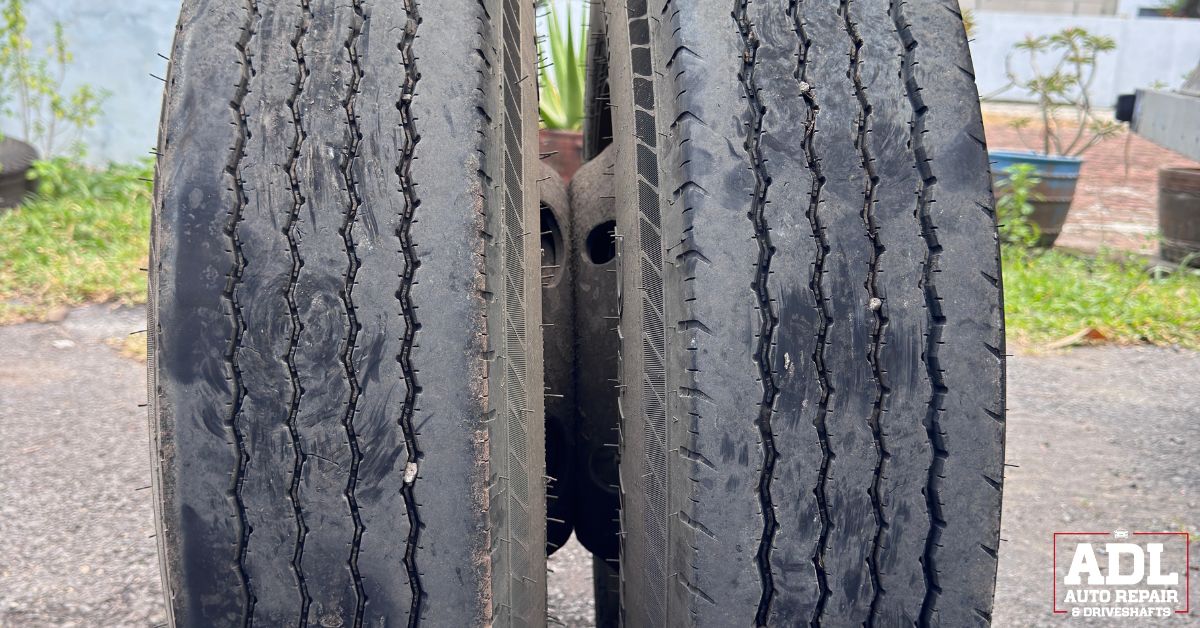
Common wear patterns include:
- Inside edge wear (negative camber)
- Outside edge wear (positive camber)
- Feathering across tread (toe misalignment)
- Cupping or scalloping (suspension issues)
This damage often appears long before drivers notice handling changes.
Why Precision Matters (Not Just “Close Enough”)
Modern vehicles require alignment accuracy measured in fractions of a degree. A difference that looks insignificant visually can shorten tire life dramatically.
For example: A toe error of just 0.20 degrees can scrub a tire sideways dozens of feet every mile. Over thousands of miles, that equals miles of grinding friction on your tread.
Precision alignment uses computerized measuring equipment to restore manufacturer specifications — not estimates.
 Benefits of Proper Wheel Alignment
 Benefits of Proper Wheel Alignment
1. Longer Tire Life
Tires are expensive. Correct alignment allows the full tread surface to share the load evenly, maximizing mileage from each set.
2. Better Fuel Economy
Misaligned tires create rolling resistance. Your engine must work harder, which reduces fuel efficiency.
3. Improved Handling and Safety
Aligned wheels track straight and maintain stable contact with the road, especially during braking and wet or icy conditions common in Minnesota.
4. Reduced Suspension Wear
Misalignment places stress on ball joints, tie rods, and bushings. Over time, this accelerates suspension failure.
5. Smoother Driving Experience
Drivers often notice a quieter ride and a centered steering wheel immediately after an alignment.
What Causes Alignment Problems?
Alignment rarely goes out on its own. Something usually moves or wears.
Common causes include:
- Potholes
- Hitting curbs or parking blocks
- Worn ball joints or tie rods
- Weak shocks or struts
- Minor accidents
- Road salt corrosion
In Minnesota, freeze‑thaw cycles create potholes that make alignment issues especially common in late winter and early spring.
Signs You May Need an Alignment
Watch for these symptoms:
- Vehicle pulls left or right
- Steering wheel off‑center
- Uneven tire wear
- Steering wheel vibration
- Tires squealing during turns
Even if you don’t notice symptoms, alignment should still be checked periodically.
How Often Should Alignment Be Checked?
A good general guideline is:
- Once per year
- After installing new tires
- After a hard pothole impact
- When suspension parts are replaced
Preventive alignment checks often save more money than replacing prematurely worn tires.
What Happens During a Professional Alignment?
At ADL Auto Repair & Driveshafts, a precision alignment typically includes:
- Suspension inspection
- Measuring camber, caster, and toe
- Adjusting wheel angles to factory specifications
- Verifying steering wheel center
- Road test confirmation
If worn parts are found, they must be repaired first — otherwise the alignment will not hold.
Local Tip for Minnesota Drivers
After winter, potholes appear quickly as roads thaw. Many drivers unknowingly drive for months with misalignment, wearing down expensive tires. A spring alignment check helps protect a new set of tires before damage begins.
FAQ – Wheel Alignment & Tire Wear
Does alignment really affect tire life?
Yes. Incorrect alignment can reduce tire life by 25%–50% depending on severity.
Is wheel balancing the same as alignment?
No. Balancing corrects vibration from weight differences in the tire. Alignment adjusts wheel angles and steering geometry.
Will an alignment fix vibration?
Sometimes, but vibration is often related to tire balance or suspension wear. A professional inspection determines the cause.
Do I need an alignment with new tires?
Yes. Installing new tires without checking alignment can cause the new tires to wear out prematurely.
How long does an alignment take?
Most alignments take about one hour if no damaged parts are found
Your tires are the only part of your vehicle that touches the road. Precision alignment ensures they meet the pavement evenly, safely, and efficiently. Small angle errors create big long‑term costs in tire replacement and handling problems.
Routine alignment checks help protect your tires, improve control, and keep your vehicle safe in all Minnesota driving conditions.
ADL Auto Repair & Driveshafts is committed to helping drivers maintain safe, reliable vehicles through accurate diagnostics and professional service.