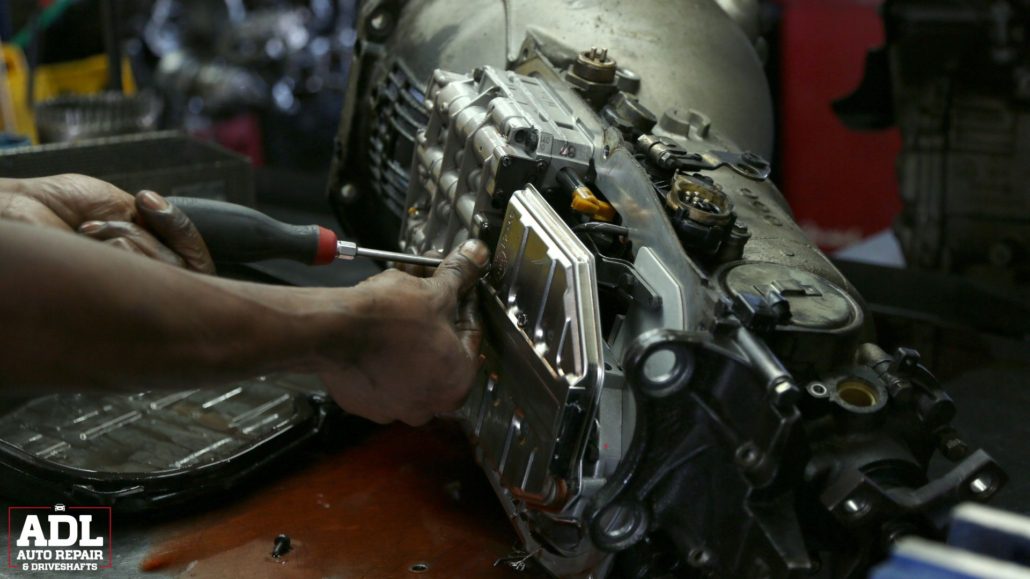
Transmission Diagnostics: How Mechanics Find Hidden Gearbox Problems
Quick Summary: Modern automatic and manual transmissions rely on complex hydraulics, internal gearsets, and computer solenoids. Professional transmission diagnostics combine OBD-II scan tool data, live solenoid testing, transmission fluid analysis, and physical pressure tests to pinpoint internal gearbox issues—such as slipping gears, delayed engagement, or severe valve body wear—before catastrophic transmission failure occurs.
Your vehicle’s transmission is one of the most complex mechanical and electronic systems in your car. When something begins to go wrong inside the gearbox, symptoms don’t always start with a loud crunch or a major breakdown. Often, early warning signs appear as subtle delayed shifts, brief engine revving between gears, or occasional harsh engagement.
At ADL Auto Repair and Driveshafts in Centerville, MN, we specialize in accurate transmission diagnostics. Below, we lift the hood on how professional technicians trace subtle symptoms down to the exact mechanical, hydraulic, or electronic component causing the issue.
1. Advanced Computer Scanning and Solenoid Data Analysis
Modern transmissions are electronically controlled by a Transmission Control Module (TCM) or the main Powertrain Control Module (PCM). When a gearbox slips or struggles to shift, the computer logs Diagnostic Trouble Codes (DTCs).
However, running a simple code scan is only the first step. Professional mechanics analyze live data streams while the vehicle operates, evaluating real-time metrics such as:
- Solenoid Duty Cycles: Checking if electronic shift solenoids respond in real time to shift commands.
- Input and Output Speed Sensor Ratios: Comparing engine RPM to driveshaft rotation speed to calculate exact internal gear slip percentages.
- Fluid Temperature Readings: Detecting overheating before thermal damage ruins internal clutch packs.
2. Transmission Fluid Inspection and Debris Analysis
Transmission fluid is the lifeblood of your gearbox, acting as both a hydraulic fluid and a lubricant. Analyzing the fluid gives technicians a clear window into the physical condition inside the sealed unit.
During an inspection, technicians evaluate:
- Color and Smell: Fresh transmission fluid is bright red or pink. Dark brown or black fluid with a burnt odor signals extreme thermal degradation and clutch wear.
- Microscopic Metal Shavings: Fine metal glitter in the fluid or pan magnet indicates wearing planetary gearsets, bearings, or bushings.
- Friction Material Deposits: Flakes or heavy sludge in the pan point directly to disintegrating clutch pack linings.
3. Hydraulic Line Pressure Testing
Automatic transmissions use hydraulic fluid pressure to compress clutch packs and engage different gear ratios. If internal line pressure drops, clutches cannot clamp fully, leading to slipping gears and severe friction damage.
Technicians thread specialized pressure gauges directly into pressure ports on the transmission case. By reading line pressures in Reverse, Drive, and at various throttle positions, mechanics can instantly tell if a shifting issue is caused by a worn oil pump, clogged filter, or sticking valve body regulator valve.
4. Road Testing and Drivetrain Isolation
Not every transmission noise or vibration originates inside the gearbox itself. Because ADL Auto Repair and Driveshafts specializes in full drivetrain systems, our technicians perform specialized road tests to distinguish transmission trouble from related components.
Issues often confused with transmission failure include:
- Worn Driveshaft U-Joints or CV Axles: Causing clunking noises when shifting into gear.
- Differentials and Transfer Cases: Creating high-pitched whines or grinding sounds on acceleration.
- Misfiring Engines: Causing vehicle hesitations or shuddering that mimics torque converter shudder.
Schedule a Transmission Check at ADL Auto Repair
Don’t ignore subtle gear slips or unusual shifting behavior. Catching a minor solenoid issue or fluid leak early can prevent a full transmission overhaul down the road. Trust the local experts at ADL Auto Repair and Driveshafts for clear answers and reliable repairs.
Call us today at (651) 426-8700 or stop by our shop at 7095 21st Avenue North, Centerville, MN 55038 to schedule your diagnostic appointment.
Frequently Asked Questions
What are the first signs of a failing transmission?
Common early signs include delayed gear engagement, slipping between gears (engine revs up without speeding up), rough or harsh shifting, burning smells, or fluid puddling under your car.
Can a diagnostic scan tell if a transmission needs to be replaced?
A computer scan provides fault codes and solenoid data, but physical testing—such as fluid analysis, line pressure tests, and mechanical inspection—is required to confirm whether a repair, rebuild, or replacement is necessary.
How long does a professional transmission diagnostic take?
A thorough transmission diagnostic typically takes between 1 to 2 hours. This provides enough time for code scanning, live data analysis, fluid checks, line pressure testing, and road testing.
Is a slipping transmission always a mechanical failure?
No. Transmission slipping can be caused by low transmission fluid levels, faulty shift solenoids, or a defective speed sensor, which can often be repaired without replacing the entire transmission.