Brake Pad Replacement vs Brake Rotor Replacement: Do You Need Both?
Quick Answer: You do not always need to replace both brake pads and brake rotors at the same time, but doing so is often recommended. Brake pads wear out faster (every 25,000–50,000 miles) than metal rotors (50,000–70,000+ miles). However, in Minnesota’s harsh driving conditions, installing new pads on worn, grooved, or salt-pitted rotors leads to uneven wear, squealing noises, and reduced stopping power. A professional inspection at ADL Auto Repair determines whether your rotors can be resurfaced or require replacement.
When you take your car in for brake service, one of the most common questions you’ll face is: “Do I really need to replace my rotors too, or can I just replace the brake pads?” Understanding the difference between brake pad replacement vs brake rotor replacement can help you make informed decisions about your vehicle’s maintenance, safety, and budget.
At ADL Auto Repair and Driveshafts, we believe in honest diagnostic evaluations. Below, we break down how pads and rotors work together, when you can swap just the pads, and when replacing both is critical for your safety on Minnesota roads.
1. Understanding the Mechanics: Brake Pads vs. Brake Rotors
To understand why brake components wear out differently, it helps to know how they work together to stop your vehicle:
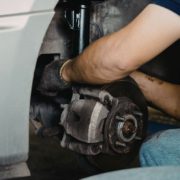
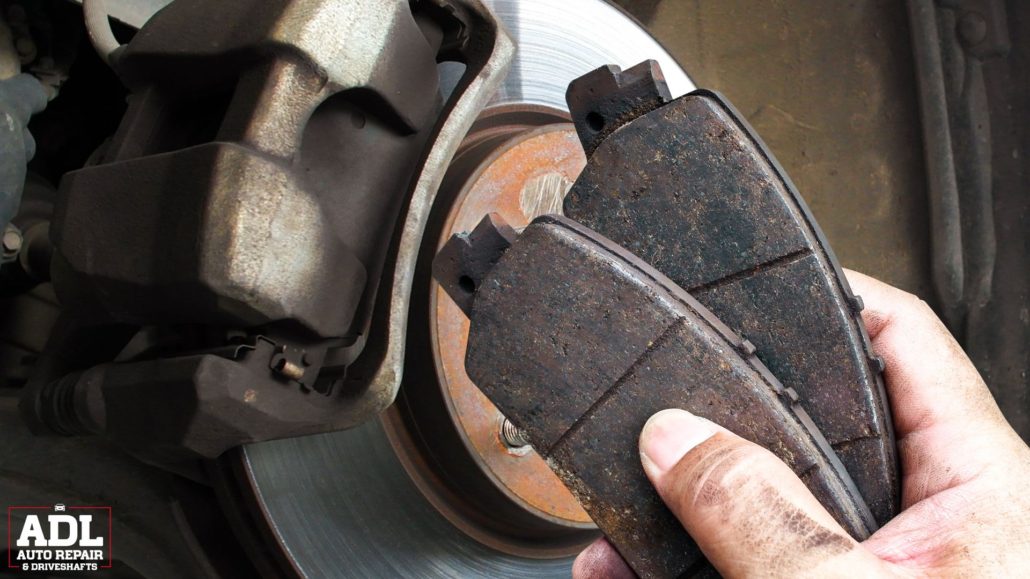
- Brake Pads: These are high-friction blocks mounted inside the brake caliper. When you step on the pedal, the caliper squeezes the pads against the rotor surface. Because pads are made of softer materials (ceramic, semi-metallic, or organic), they are engineered to wear down over time to protect the metal components.
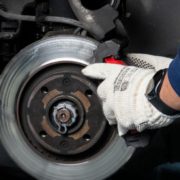
- Brake Rotors: These are the large, smooth iron discs attached directly to your vehicle’s wheels. They absorb and dissipate the extreme kinetic heat generated when friction is applied by the brake pads.
2. Can You Replace Just the Brake Pads?
Yes, in certain circumstances, you can perform a “pad-only” replacement (often called a pad slap). This is viable if:
- Your rotors meet manufacturer thickness specifications: Rotors have a minimum safe operational thickness stamped on them. If yours are well above that limit, they may not need to be replaced.
- The rotor surface is smooth and flat: If there are no deep grooves, warping, heat cracks, or heavy lip buildup along the outer edge.
- There is no severe rust pitting: Especially relevant in Minnesota, where road salt can rot metal edges from the inside out.
3. Why Replacing Both Is Often the Best Choice in Minnesota
While replacing only the pads saves money upfront, placing brand-new, perfectly flat brake pads onto old, uneven, or heat-warped rotors can cause several problems:
- Uneven Pad Wear: New pads will conform to the deep grooves and ridges of worn rotors, cutting down the life of your new pads by up to 50%.
- Brake Noise & Vibration: Mismatched surfaces frequently result in high-pitched squealing, grinding noises, or a pulsating brake pedal (steering wheel shake).
- Reduced Stopping Distance: Reduced surface contact between an uneven rotor and a fresh pad reduces immediate stopping power in emergency braking situations.
- The Minnesota Salt Factor: Road salt corrodes the internal cooling vanes of brake rotors. Even if the surface looks acceptable, severe internal rust compromises heat dissipation.
 4. What About Resurfacing (Turning) Your Rotors?
 4. What About Resurfacing (Turning) Your Rotors?
Rotor resurfacing involves using a precision lathe machine to shave off a microscopic layer of metal, creating a fresh, smooth surface for new pads. Resurfacing is a great middle-ground option if your rotors have minor surface imperfections but still retain plenty of metal thickness. However, if modern rotors are already thin or severely rusted, replacement is safer and often more cost-effective.
Get an Honest Brake Inspection at ADL Auto Repair
Unsure whether your vehicle needs new brake pads, rotor resurfacing, or a full replacement? Avoid guessing when it comes to your road safety. At ADL Auto Repair and Driveshafts, our experienced technicians measure your rotor thickness with precision micrometer tools and provide clear recommendations.
Call us today at (651) 426-8700 or stop by our shop at 7095 21st Avenue North, Centerville, MN 55038 for expert brake service you can trust.
Frequently Asked Questions
Do I need to replace both brake pads and rotors at the same time?
Not always. If your rotors are smooth, unwarped, and above the minimum thickness limit, you can replace just the brake pads. However, installing new pads on worn rotors can reduce pad life and cause brake noise.
How long do brake pads and rotors last?
Brake pads typically last between 25,000 to 50,000 miles depending on driving habits and traffic conditions. Brake rotors generally last longer, typically lasting 50,000 to 70,000 miles or more before needing replacement or resurfacing.
What happens if I change brake pads but not rotors?
If you put new brake pads on old, grooved, or warped rotors, the pads will wear down unevenly and quickly. You may also experience pedal vibration, noisy braking, and slightly longer stopping distances.
How do I know if my rotors need to be replaced instead of turned?
Rotors must be replaced if they fall below the minimum manufacturer thickness limit, have deep heat cracks or structural rust pitting, or if resurfacing them would make them too thin to safely dissipate heat.